Authorized IMO Publications Reseller
Atlas Code Publications serves as an authorized gateway to the International Maritime Organization (IMO), supporting regulatory reference, onboard documentation, and operational compliance across the international maritime sector.
We provide direct access to the official IMO catalogue, including certified printed publications and official digital licensing sourced directly from the IMO.
01
Maritime Safety
Official IMO publications supporting shipboard safety procedures, emergency preparedness and operational standards.
02
Environmental Protection
Technical references addressing marine pollution prevention, environmental compliance and sustainable maritime operations.
03
Navigation & Compliance
Regulatory publications supporting navigational procedures, onboard documentation and international maritime requirements.
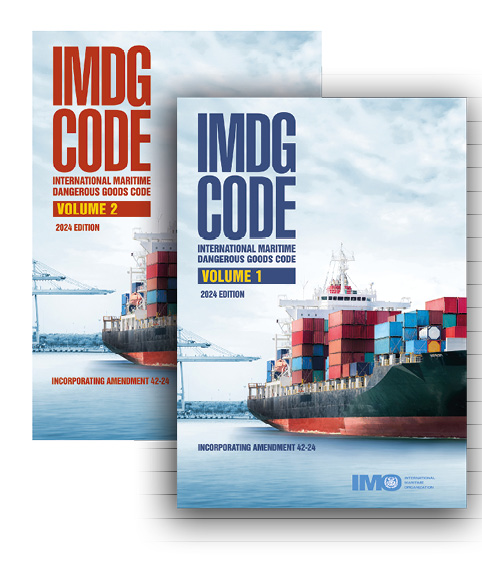
2024 Edition, incorporating amendment 42-24
IMDG Code
Amendment 42-24 includes revisions to various sections of the Code and to transport requirements for specific substances. It was adopted by the International Maritime Organization’s Maritime Safety Committee at its one hundred and eighth session in May 2024 and is mandatory from 1 January 2026 but may be applied by Administrations in whole or in part on a voluntary basis from 1 January 2025.
Volume 1 containing sections on general provisions, definitions and training; classification; packing and tank provisions; consignment procedures; construction and testing of packagings, IBCs, large packagings, portable tanks, MEGCs and road tank vehicles and transport operations.
Volume 2 containing the Dangerous Goods List, special provisions and exceptions, Appendix A (list of generic and N.O.S. proper shipping names), Appendix B (glossary of terms) and the Index.
© International Maritime Organization, 2024
Hardcopy: Immediate stock available (Spanish Edition).
Digital (e-Reader): Available in English, French and Spanish.
Volume 1 containing sections on general provisions, definitions and training; classification; packing and tank provisions; consignment procedures; construction and testing of packagings, IBCs, large packagings, portable tanks, MEGCs and road tank vehicles and transport operations.
Volume 2 containing the Dangerous Goods List, special provisions and exceptions, Appendix A (list of generic and N.O.S. proper shipping names), Appendix B (glossary of terms) and the Index.
© International Maritime Organization, 2024
Hardcopy: Immediate stock available (Spanish Edition).
Digital (e-Reader): Available in English, French and Spanish.
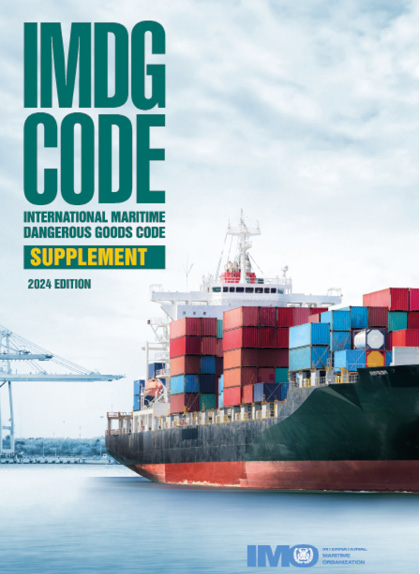
2024 Edition
IMDG Code Supplement
The 2024 edition of the Supplement features:
• The Revised Emergency Response Procedures for Ships Carrying Dangerous Goods (EmS Guide), taking into account Amendment 42-24 to the IMDG Code;
• The Medical First Aid Guide for Use in Accidents involving Dangerous Goods (MFAG);
• The Reporting procedures;
• The Recommendations on the safe use of pesticides in ships;
• The International Code for the Safe Carriage of Packaged Irradiated Nuclear Fuel, Plutonium and High-Level Radioactive Wastes on board Ships (INF Code); and
• Other appropriate resolutions and circulars pertaining to the transport of dangerous goods, including Guidelines for the implementation of the inspection programmes for cargo transport units (MSC.1/Circ.1649) and the List of non-exhaustive voluntary guidance on pest contamination (MSC.1/Circ.1650).
© International Maritime Organization, 2024
Hardcopy: Immediate stock available (Spanish Edition).
Digital (e-Reader): Available in English, French and Spanish.
• The Revised Emergency Response Procedures for Ships Carrying Dangerous Goods (EmS Guide), taking into account Amendment 42-24 to the IMDG Code;
• The Medical First Aid Guide for Use in Accidents involving Dangerous Goods (MFAG);
• The Reporting procedures;
• The Recommendations on the safe use of pesticides in ships;
• The International Code for the Safe Carriage of Packaged Irradiated Nuclear Fuel, Plutonium and High-Level Radioactive Wastes on board Ships (INF Code); and
• Other appropriate resolutions and circulars pertaining to the transport of dangerous goods, including Guidelines for the implementation of the inspection programmes for cargo transport units (MSC.1/Circ.1649) and the List of non-exhaustive voluntary guidance on pest contamination (MSC.1/Circ.1650).
© International Maritime Organization, 2024
Hardcopy: Immediate stock available (Spanish Edition).
Digital (e-Reader): Available in English, French and Spanish.
2025 Edition
IAMSAR Manual Volume I
Jointly published by IMO and the International Civil Aviation Organization (ICAO), the three-volume International Aeronautical and Maritime Search and Rescue Manual (IAMSAR) provides guidelines for a common aviation and maritime approach to organizing and providing search and rescue (SAR) services. Each volume can be used as a stand-alone document or, in conjunction with the other two volumes, as a means to attain a full view of the SAR system. The three volumes (sold separately) of this edition of the IAMSAR Manual come into force on 1 January 2026.
IAMSAR Manual, Volume I – Organization and Management (2025 Edition)
Volume I discusses the global SAR system concept, establishment and improvement of national and regional SAR systems and co-operation with neighbouring States to provide effective and economical SAR services.
© IMO/ICAO, 2025
Digital (e-Reader): Available in English, French and Spanish.
IAMSAR Manual, Volume I – Organization and Management (2025 Edition)
Volume I discusses the global SAR system concept, establishment and improvement of national and regional SAR systems and co-operation with neighbouring States to provide effective and economical SAR services.
© IMO/ICAO, 2025
Digital (e-Reader): Available in English, French and Spanish.
2025 Edition
IAMSAR Manual Volume II
The Mission Coordination volume assists personnel who plan and coordinate SAR operations and exercises.
© IMO/ICAO, 2025
Digital (e-Reader): Available in English, French and Spanish.
© IMO/ICAO, 2025
Digital (e-Reader): Available in English, French and Spanish.
2025 Edition
IAMSAR Manual Volume III
The Mobile Facilities volume is intended to be carried on board rescue units, aircraft and vessels to help with the performance of a search, rescue or on-scene coordinator function and with aspects of search and rescue that pertain to their own emergencies.
A new edition of the IAMSAR Manual is published every three years. The 2025 edition includes amendments, adopted by the International Civil Aviation Organization (ICAO) and approved by the Maritime Safety Committee of the International Maritime Organization (IMO) at its 109th session in December 2024 by means of MSC.1/Circ.1686, which become applicable on 1 January 2026.
© IMO/ICAO, 2025
Hardcopy: Immediate stock available (Spanish Edition).
Digital (e-Reader): Available in English, French and Spanish.
A new edition of the IAMSAR Manual is published every three years. The 2025 edition includes amendments, adopted by the International Civil Aviation Organization (ICAO) and approved by the Maritime Safety Committee of the International Maritime Organization (IMO) at its 109th session in December 2024 by means of MSC.1/Circ.1686, which become applicable on 1 January 2026.
© IMO/ICAO, 2025
Hardcopy: Immediate stock available (Spanish Edition).
Digital (e-Reader): Available in English, French and Spanish.
CONSOLIDATED EDITION, 2024
SOLAS
Of all the international conventions dealing with maritime safety, the most important is the International Convention for the Safety of Life at Sea, better known as SOLAS, which covers a wide range of measures designed to improve the safety of shipping.
The Convention is also one of the oldest of its kind: the first version was adopted in 1914 following the sinking of the Titanic with the loss of more than 1,500 lives. Since then there have been four more versions of SOLAS. The present Convention was adopted in 1974 and entered into force in 1980.
This 2024 edition provides the full consolidated text of the SOLAS Convention, its 1988 Protocol and all amendments in force up to 1 July 2024.
© International Maritime Organization, 2024
Hardcopy: Immediate stock available (Spanish Edition).
Digital (e-Reader): Available in English, Spanish, French, and Chinese.
The Convention is also one of the oldest of its kind: the first version was adopted in 1914 following the sinking of the Titanic with the loss of more than 1,500 lives. Since then there have been four more versions of SOLAS. The present Convention was adopted in 1974 and entered into force in 1980.
This 2024 edition provides the full consolidated text of the SOLAS Convention, its 1988 Protocol and all amendments in force up to 1 July 2024.
© International Maritime Organization, 2024
Hardcopy: Immediate stock available (Spanish Edition).
Digital (e-Reader): Available in English, Spanish, French, and Chinese.
CONSOLIDATED EDITION, 2022
MARPOL
The International Convention for the Prevention of Pollution from Ships, 1973 (MARPOL Convention), is concerned with preserving the marine environment through the prevention of pollution by oil and other harmful substances and the minimization of accidental discharge of such substances. Its technical content is laid out in six Annexes, the first five of which were adopted by the 1973 Convention, as modified by a 1978 Protocol.
These Annexes cover pollution of the sea by oil, by noxious liquid substances in bulk, by harmful substances in packaged form, by sewage from ships and by garbage from ships. Annex VI was adopted by a further Protocol in 1997 and covers air pollution from ships.
The 2022 consolidated edition provides an easy and comprehensive reference to the up-to-date provisions and unified interpretations of the articles, Protocols and Annexes of the MARPOL Convention, including the incorporation of all of the amendments that have been adopted by the Marine Environment Protection Committee (MEPC) with entry into force up to 1 November 2022.
© International Maritime Organization, 2022
Hardcopy: Available upon request (Spanish Edition).
Digital (e-Reader): Available in English, French, Spanish, Russian, Arabic and Chinese.
These Annexes cover pollution of the sea by oil, by noxious liquid substances in bulk, by harmful substances in packaged form, by sewage from ships and by garbage from ships. Annex VI was adopted by a further Protocol in 1997 and covers air pollution from ships.
The 2022 consolidated edition provides an easy and comprehensive reference to the up-to-date provisions and unified interpretations of the articles, Protocols and Annexes of the MARPOL Convention, including the incorporation of all of the amendments that have been adopted by the Marine Environment Protection Committee (MEPC) with entry into force up to 1 November 2022.
© International Maritime Organization, 2022
Hardcopy: Available upon request (Spanish Edition).
Digital (e-Reader): Available in English, French, Spanish, Russian, Arabic and Chinese.
2024 Edition
GMDSS Manual
The Global Maritime Distress and Safety System (GMDSS) Manual provides, in a single comprehensive publication, an explanation of the principles upon which the GMDSS is based, the radiocommunication requirements and recommendations for its implementation, the operational performance standards and technical specifications to be met by GMDSS equipment, and the procedures for and method of operation of the various radio services which form the GMDSS and the Master Plan for the GMDSS.
The 2024 edition contains the latest information emanating from the IMO project on the modernization of the GMDSS, which was completed in 2022 and led to the overall revision of relevant SOLAS regulations and many other mandatory and non-mandatory IMO instruments related to the GMDSS.
© International Maritime Organization, 2024
Digital (e-Reader): Available in English.
The 2024 edition contains the latest information emanating from the IMO project on the modernization of the GMDSS, which was completed in 2022 and led to the overall revision of relevant SOLAS regulations and many other mandatory and non-mandatory IMO instruments related to the GMDSS.
© International Maritime Organization, 2024
Digital (e-Reader): Available in English.
2025 Edition
Ships' Routeing
Both the safety of shipping and the cleanliness of oceans are promoted in many ways, one of which is the continuing development of routeing measures to control the navigation of vessels and to monitor their progress.
The measures that are described or defined in parts A and H of this publication are individually described in parts B (traffic separation schemes and inshore traffic zones), C (deepwater routes), D (areas to be avoided), E (other routeing measures, such as recommended tracks, two-way routes and recommended directions of traffic flow), F (the rules and recommendations on navigation that are associated with particular traffic areas and straits), G (mandatory ship reporting systems, mandatory routeing systems and mandatory no anchoring areas) and H (archipelagic sea lanes).
This edition incorporates routeing measures that have been adopted before September 2025.
© International Maritime Organization, 2025
Digital (e-Reader): Available in English.
The measures that are described or defined in parts A and H of this publication are individually described in parts B (traffic separation schemes and inshore traffic zones), C (deepwater routes), D (areas to be avoided), E (other routeing measures, such as recommended tracks, two-way routes and recommended directions of traffic flow), F (the rules and recommendations on navigation that are associated with particular traffic areas and straits), G (mandatory ship reporting systems, mandatory routeing systems and mandatory no anchoring areas) and H (archipelagic sea lanes).
This edition incorporates routeing measures that have been adopted before September 2025.
© International Maritime Organization, 2025
Digital (e-Reader): Available in English.
2005 Edition, published in 2022
International Code of Signals
This edition of the Code incorporates all amendments adopted by the Maritime Safety Committee up to 2000.
The Code is intended for communications between ships, aircraft and authorities ashore during situations related essentially to the safety of navigation and persons; it is especially useful when language difficulties arise. The Code is suitable for transmission by all means of communication, including radiotelephony and radiotelegraphy.
© International Maritime Organization
Hardcopy: Immediate stock available (Spanish Edition).
Digital (e-Reader): Available in English, French and Spanish.
The Code is intended for communications between ships, aircraft and authorities ashore during situations related essentially to the safety of navigation and persons; it is especially useful when language difficulties arise. The Code is suitable for transmission by all means of communication, including radiotelephony and radiotelegraphy.
© International Maritime Organization
Hardcopy: Immediate stock available (Spanish Edition).
Digital (e-Reader): Available in English, French and Spanish.
2023 Edition
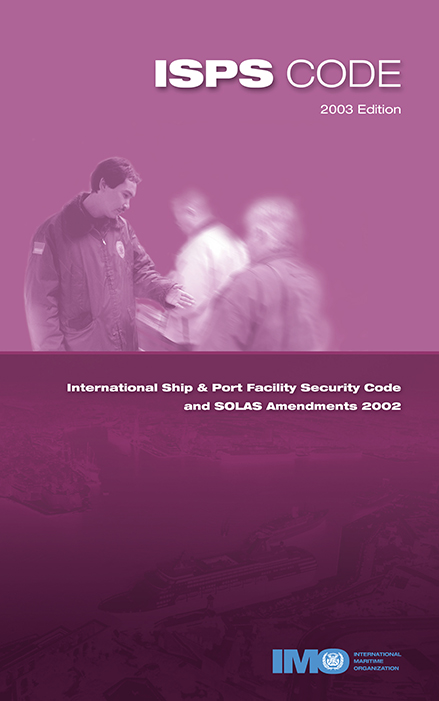
ISPS Code
The International Ship and Port Facility Security Code (ISPS Code) was adopted by a Conference of Contracting Governments to the International Convention for the Safety of Life at Sea, 1974, in December 2002.
The ISPS Code aims, among other things, to establish an international framework for co-operation between Contracting Governments, Government agencies, local administrations and the shipping and port industries to detect security threats and take preventive measures against security incidents affecting ships or port facilities used in international trade and to establish relevant roles and responsibilities at the national and international level.
© International Maritime Organization, 2003
Digital (e-Reader): Available in English, French, Spanish, Arabic, Chinese, and Russian.
The ISPS Code aims, among other things, to establish an international framework for co-operation between Contracting Governments, Government agencies, local administrations and the shipping and port industries to detect security threats and take preventive measures against security incidents affecting ships or port facilities used in international trade and to establish relevant roles and responsibilities at the national and international level.
© International Maritime Organization, 2003
Digital (e-Reader): Available in English, French, Spanish, Arabic, Chinese, and Russian.
2021 Edition
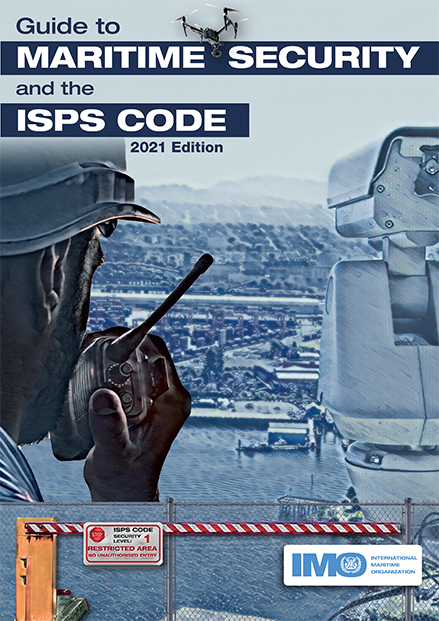
Guide to Maritime Security and the ISPS Code
This User Guide has been developed to consolidate existing IMO maritime security-related material into an easily read companion guide to SOLAS chapter XI-2 and the ISPS Code in order to assist States in promoting maritime security through development of the requisite legal framework, associated administrative practices, procedures and the necessary material, technical and human resources.
It includes the International Ship and Port Facility Security Code (ISPS Code).
Digital (e-Reader): Available in Arabic, English, French and Spanish.
Digital (e-Reader): Available in Arabic, English, French and Spanish.
2026 Edition
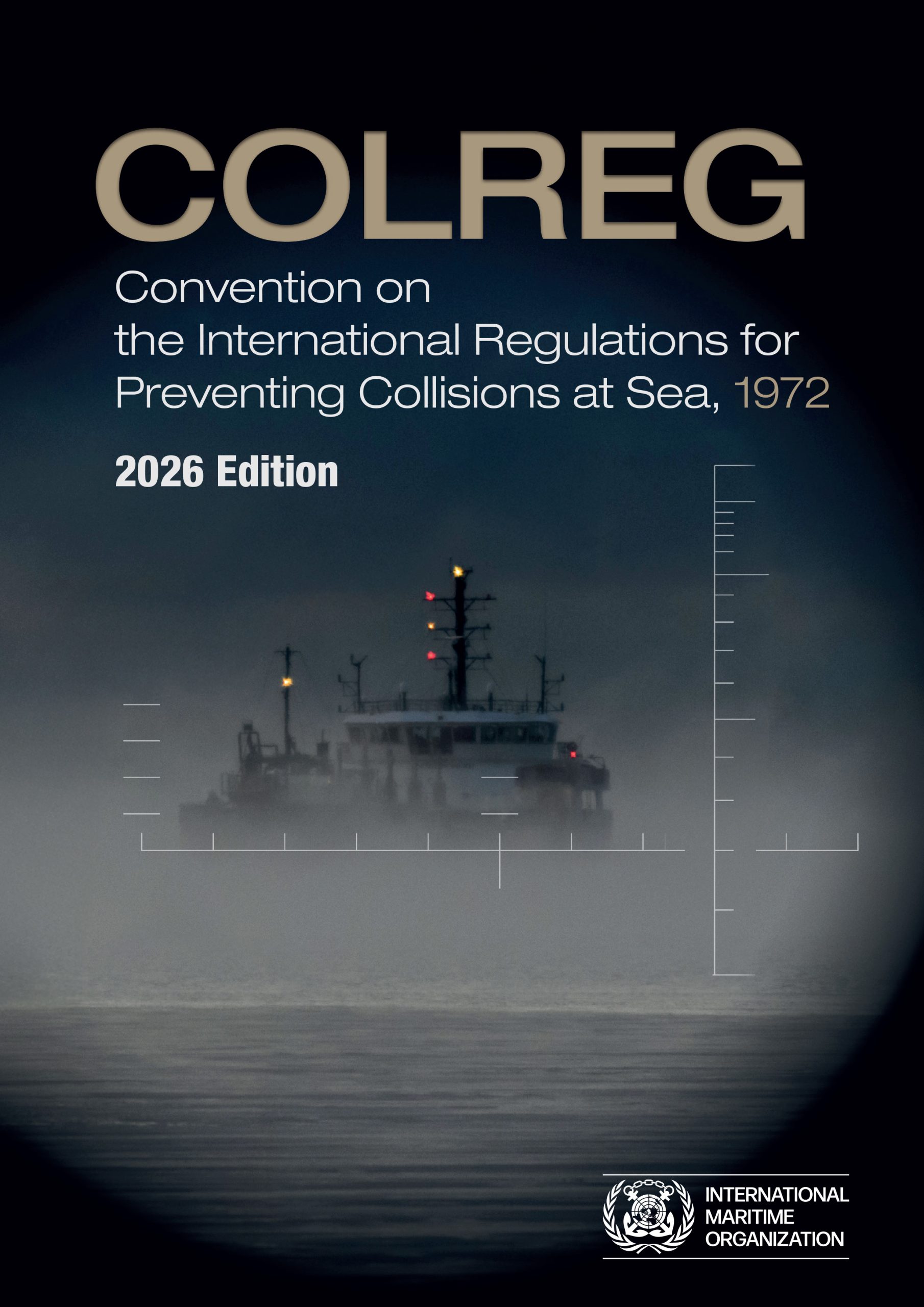
COLREG
This edition of the Convention on the International Regulations for Preventing Collisions at Sea, 1972 (COLREG 1972) contains the consolidated text of the 1972 Convention and all amendments adopted by the Maritime Safety Committee and resolutions adopted by the Assembly of the International Maritime Organization, including the latest amendments from resolution A.1085(28) which entered into force on 1 January 2016.
© International Maritime Organization, 2026
Digital (e-Reader): Available in English, French and Spanish.
© International Maritime Organization, 2026
Digital (e-Reader): Available in English, French and Spanish.
IMO
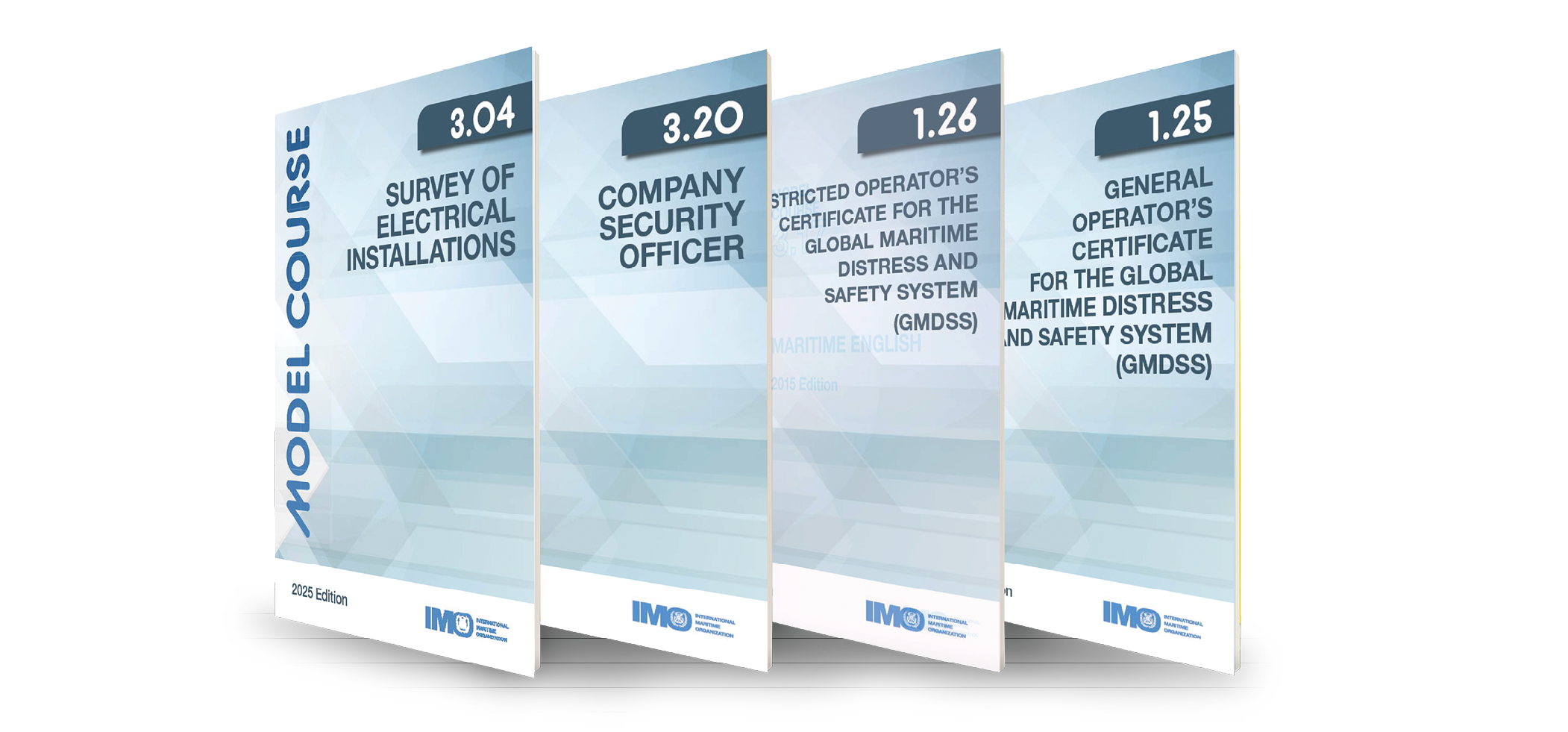
Model Courses
Following the adoption of the International Convention on Standards of Training, Certification and Watchkeeping for Seafarers (STCW), IMO has developed a series of Model Courses. These courses assist maritime training institutes and teaching staff in organizing and introducing new training programs, facilitating access to the knowledge and skills demanded by increasingly sophisticated maritime technology.
Require a specific title or fleet quote?
As an authorized provider, Atlas Code Publications facilitates direct access to the full IMO catalogue. Our global logistics network and digital activation services are designed to support uninterrupted vessel operations wherever they are needed.
Please specify the titles and quantities required in your email for a faster quotation.